Carlo Griffin · 24 September 2026
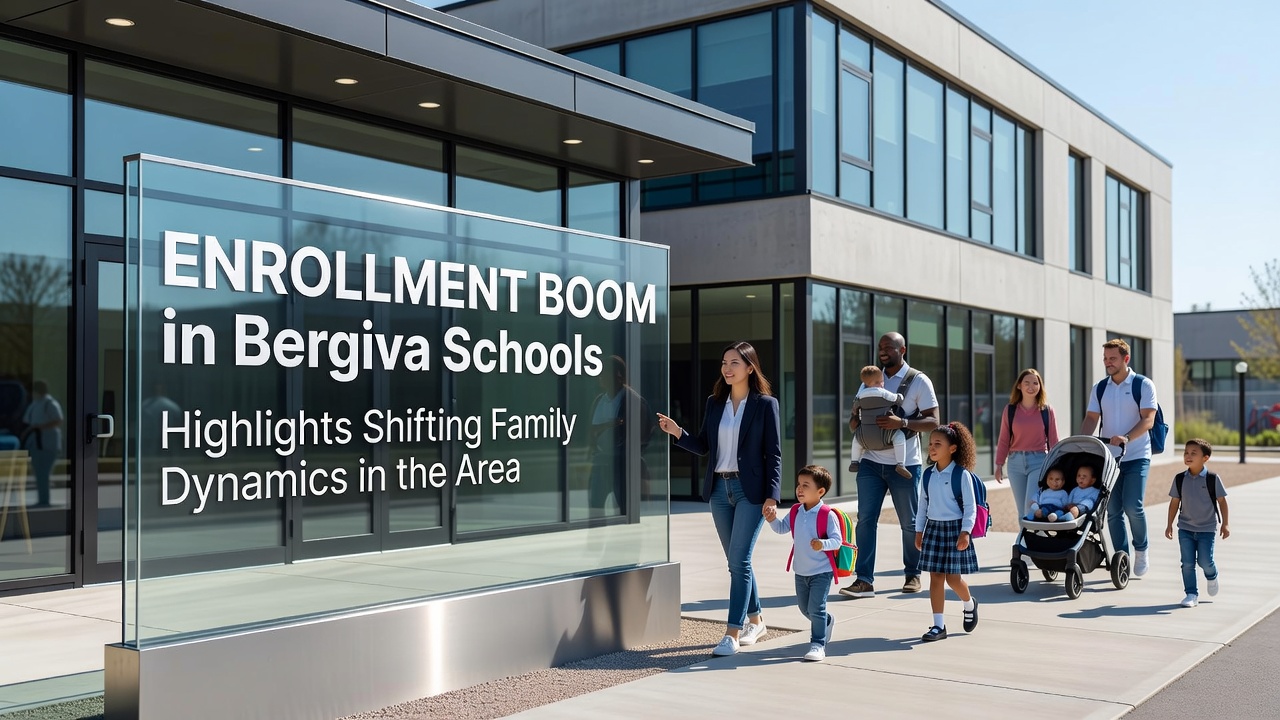
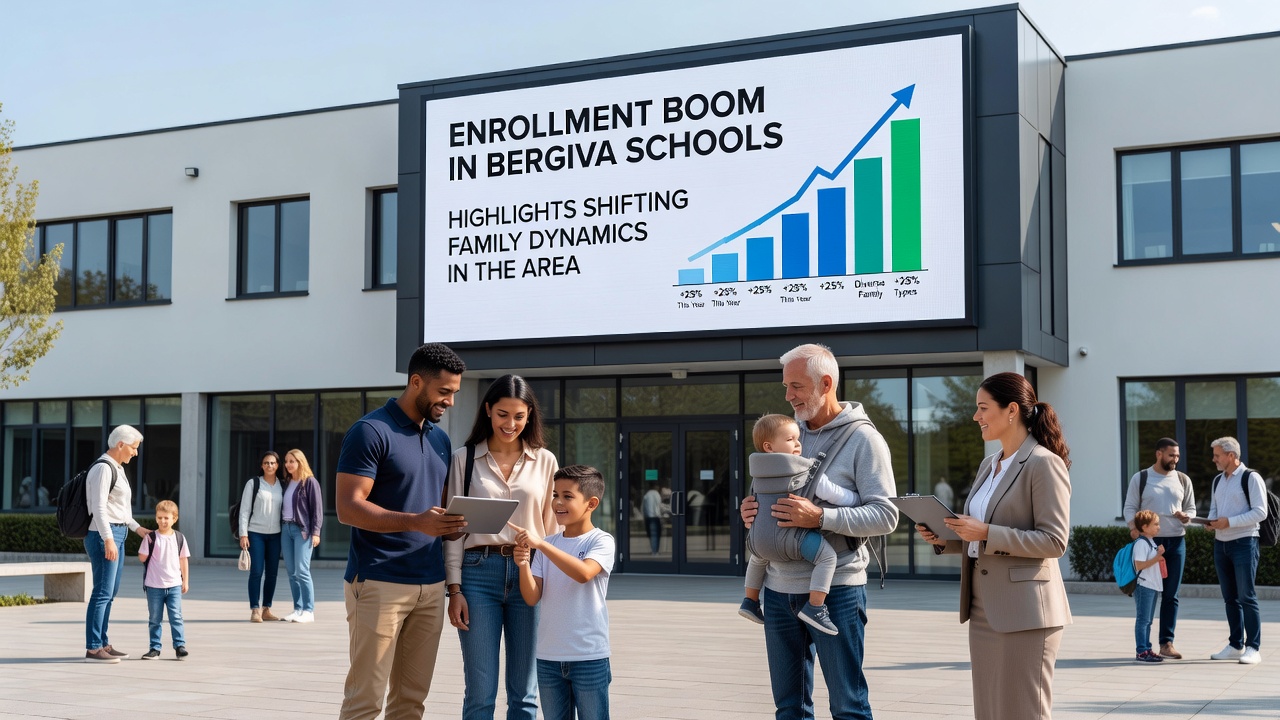
Enrollment Boom in Bergiva Schools Highlights Shifting Family Dynamics in the Area
School enrollment numbers across Bergiva have risen steadily over the past three years, with the most recent data covering the period leading into September 2026 showing an overall increase of 18 percent compared to 2023 figures. Local education authorities attribute the growth to a combination of new residential developments, changes in household composition, and families relocating from nearby urban centers. District records indicate that primary schools absorbed the largest share of new students while secondary institutions reported more modest but consistent gains in the same timeframe.
Key Enrollment Figures and Trends
Figures compiled by the Bergiva Education Department reveal that total student registrations reached 4,872 in the current cycle, up from 4,128 three years earlier. Analysts note that families with children under age 10 account for nearly two-thirds of the net increase while households with teenagers contributed smaller increments. The pattern aligns with broader observations from researchers who track migration within mid-sized European communities and similar trends documented in reports from Statistics Canada on family relocation patterns.
Multiple schools expanded classroom capacity during summer 2026 to accommodate the incoming groups, and several facilities added temporary modular units where permanent construction had not yet been completed. District planners report that three elementary buildings now operate at 92 percent of their designed maximum, prompting discussions about future infrastructure needs without immediate commitments to new builds.
Factors Driving Family Movement
Real estate transaction data shows that homes in Bergiva neighborhoods with direct access to schools sold 27 percent faster in 2025 than comparable properties in adjacent districts. Employment opportunities in nearby technology and logistics sectors drew working-age adults, many of whom arrived with school-aged children. Observers note that remote-work arrangements also played a role, allowing some households to prioritize location near extended family networks or lower-density living environments.
Demographic Shifts in Household Composition
Census updates released earlier this year indicate that the proportion of two-parent households with two or more children rose from 31 percent to 37 percent within Bergiva boundaries over five years. Single-parent families increased at a slower rate yet still contributed to overall enrollment pressure. These changes mirror findings from the Australian Institute of Family Studies, which documented comparable household restructuring in regional centers experiencing similar economic transitions.
Community services including childcare centers and after-school programs have extended waiting lists, with some providers reporting backlogs that extend into early 2027. Local authorities have responded by increasing subsidies for private operators and by coordinating transportation routes that connect newer residential zones to existing school sites.
Impacts on School Operations and Resources
Teacher recruitment efforts intensified in spring 2026 as staffing ratios approached district-mandated limits. The education department hired 14 additional classroom instructors for the September term, drawing candidates from both regional training programs and national applicant pools. Support staff positions in counseling and special education also expanded to address the wider range of student needs reflected in the incoming cohorts.
Transportation logistics required adjustments after enrollment maps showed clusters of new families in previously low-density areas. Bus routes added three new stops while extending two existing lines, resulting in average ride times remaining under 25 minutes for 85 percent of riders according to route audits conducted in August 2026.
Community Responses and Planning Outlook
Parent associations at affected schools organized information sessions throughout the summer to discuss capacity concerns and curriculum continuity. District administrators presented enrollment projections extending through 2030 that anticipate continued moderate growth provided current migration rates persist. Those projections incorporate data from municipal planning offices that track housing permits and anticipated occupancy rates in approved developments.
Coordination between school boards and municipal planners continues on a quarterly basis, focusing on aligning future residential approvals with projected classroom availability. While no new school construction has been approved, preliminary site evaluations have been completed for two locations identified as high-growth zones in the next five-year window.
Conclusion
The enrollment increases observed through September 2026 reflect measurable changes in where families choose to settle and how household structures evolve within the Bergiva area. Ongoing data collection by local authorities will determine whether the current trajectory stabilizes or accelerates, informing resource allocation decisions that extend beyond immediate classroom needs into long-term community infrastructure planning.